The History of Fortune-Telling and Cartomancy: A Mystical Journey Through Time

Fortune-telling and cartomancy are not merely products of modern fascination but are steeped in the annals of history, reaching back to ancient civilizations. These practices reflect humanity’s perpetual quest to understand the unknown and influence the cosmos’ mysterious forces.

Ancient Beginnings

The practice of fortune-telling, or divination, dates back to the earliest human civilizations. Ancient Mesopotamians, Egyptians, and Chinese used various forms of divination to guide rulers, foresee the outcomes of battles, and predict the success of harvests. The Chinese, for instance, employed methods like I Ching, which involved tossing coins or yarrow sticks to construct hexagrams interpreted by diviners as messages from the gods.

In ancient Egypt, priests and priestesses used scrying—staring into reflective surfaces like water, mirrors, or glass—to glimpse the future. Such practices were deeply intertwined with their beliefs in gods and the afterlife, illustrating early humans’ deep desire for cosmic guidance.

Medieval Magic and Cartomancy’s Emergence

As Europe entered the medieval era, the practice of fortune-telling diversified with the introduction of Tarot cards, originally used for games in the 14th century. It wasn’t until the late 18th century that these cards were prominently used for divination, particularly through the efforts of French occultist Jean-Baptiste Alliette, also known as Etteilla. He was one of the first to publish a detailed method for tarot divination and linked the cards to Egyptian lore, thus embedding a deeper mystical quality to the practice.

The Gypsies and the Spread of Cartomancy

The nomadic Romani people, often referred to as Gypsies (though the term can be considered pejorative), were pivotal in spreading tarot reading across Europe. Their mystical reputation and the allure of the exotic practices they brought with them from their travels across the continent popularized cartomancy among all social classes. Their methods often involved ordinary playing cards, from which evolved the specific cartomancy systems we recognize today, like the Lenormand cards, named after the famous French fortune-teller Mademoiselle Lenormand who advised Napoleon Bonaparte and Josephine.

The Victorian Obsession with the Occult

The Victorian era marked a peak in the fascination with the occult, including fortune-telling. During this time, societies like the Hermetic Order of the Golden Dawn, which counted among its members influential figures like Arthur Edward Waite and Aleister Crowley, developed complex tarot systems and interpretations that are still in use today. These societies intertwined fortune-telling with Kabbalah, alchemy, and other mystical and esoteric systems, elevating it from folk practice to scholarly occultism.

Modern Resurgence and Cultural Integration

Today, fortune-telling and particularly cartomancy have seen a resurgence in popularity, reflecting a broader spiritual awakening and a rise in interest in new-age practices. Modern adaptations of tarot, like oracle cards and angel cards, cater to contemporary needs while maintaining the traditional roots. The internet and digital media have played significant roles in this revival, enabling enthusiasts to learn and practice cartomancy more easily and connect with a global community of like-minded individuals.

Conclusion

The enduring allure of fortune-telling and cartomancy lies in their ability to tap into our deepest fears, hopes, and questions about the future. As tools for introspection and decision-making, they mirror our complex human psychology and the timeless desire to find meaning in life’s uncertainties. Whether through a traditional tarot spread or a modern digital reading, the cards continue to offer a link to the mystical, a bridge between the known and the unknown.

This exploration of fortune-telling and cartomancy reveals not just a history of practices but a cultural phenomenon that continues to evolve and adapt, maintaining its relevance and appeal in a rapidly changing world.

References:

  1. Encyclopedia Britannica. (2020). I Ching. Retrieved from https://www.britannica.com/topic/I-Ching
  2. Dummett, M. (1980). The Game of Tarot. Duckworth.
  3. Matthews, C. (1999). The Complete Lenormand Oracle Handbook. Inner Traditions.

VIEW MY DECK DESIGNS:

LENORMAND | ORACLE | TAROT | PLAYING CARDS

The Tarot Of World War II

In Memory Of Bravery And Reconciliation

This is a seemingly strange subject for Tarot imagery, that being World War II. I say ‘seemingly’ because for thousands of years, the implications of Krishna speaking the Bhagavad-gita to his friend Arjuna on the Battlefield of Kurukshetra has been a template for how one might live, view, and navigate life.

Generic Tarot Deck


MY OTHER TAROT DECKS
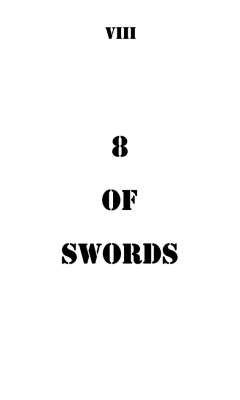

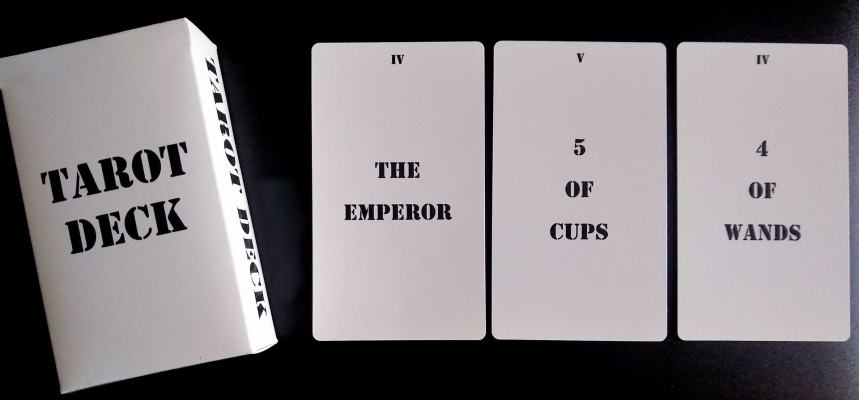
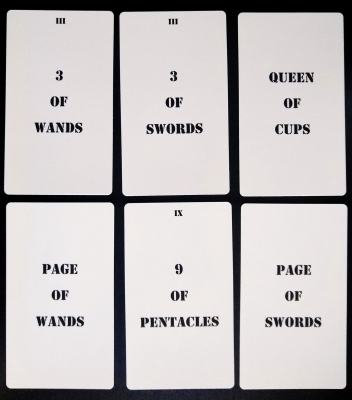
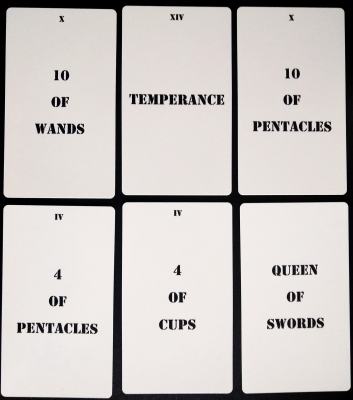
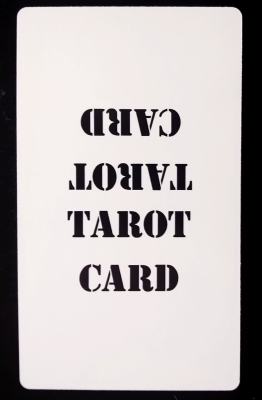
The concept of The Generic Tarot came from the idea of ‘How minimalist can I go? Maybe stick figures?’ but then I discovered that that’s already been done! (marvelously, by the way). Then I was left to think… ‘My goodness, how do you get more minimalist than stick figures?’ Well, this is how!

I hope this offers a unique and whimsical take on the traditional tarot deck, stripping away the elaborate artwork and symbolism typically associated with tarot, and emphasizing minimalism and simplicity.

No Guidebook:

In keeping with the minimalist generic motif, there is no guidebook included. Seasoned readers are invited to rely heavily on their intuition, instincts, experiences, and personal interpretations. Trust the inner voice and wisdom. Or you could look it up on the internet like everyone else.

Reading with The Generic Tarot:

Using The Generic Tarot for readings presents an interesting challenge. Without the usual visual cues and symbolic references, readers must focus more on the energy and intuition that each card evokes. This could lead to a more abstract and emotionally driven reading style or a very boring reading. Seriously, the odds are 50/50, take a chance.

A Unique Tool for Experienced Readers:

The Generic Tarot, with its minimalist approach, might particularly appeal to experienced tarot readers who are familiar with the traditional meanings of the cards and are looking for a fresh, uncluttered new way to flex.

Novelty and Humor in Divination:

The humorous intent behind The Generic Tarot adds a layer of lightheartedness to the practice, making this deck a delightful tool for breaking the ice in group readings or as a novel addition to a tarot enthusiast’s collection.

The Generic Tarot in the Modern Context:

The concept of The Generic Tarot is particularly relevant in today’s world, where there is a growing appreciation for minimalism and essentialism in various forms of art and expression. This deck could be viewed as a reflection of the desire to strip away the non-essential, focusing on the core. Or, more probably and likely, it simply tickled my funny bone to create this deck.

Either way, have fun! Excelsior!!!


MY OTHER TAROT DECKS


About Tarot Decks

tarot decks

VIEW MY TAROT DECKS


Tarot Decks, renowned for their intricate art and profound symbolism, serve a dual purpose: as instruments for gaming and as tools for divination. Originating in the mid-15th century, their journey from leisurely pastimes to gateways of the subconscious reflects a fascinating evolution, intertwining with various cultural and mystical traditions.

Historical Origins

Tarot cards first emerged in Europe during the 15th century, with the earliest recorded decks appearing in Italy. Initially created for the aristocracy, these cards were used for a game called Tarocchini, spreading across Europe and evolving into different variants. Unlike modern playing cards, early Tarot Decks included a fifth suit, the trumps, or Major Arcana, depicting allegorical illustrations that added complexity and depth to the game.

Evolution into Divination Tools

The transformation of Tarot Decks from gaming cards to mystical tools for divination is a testament to the human fascination with the unknown. In the late 18th century, occult practitioners in France and England began to ascribe deeper esoteric meanings to the cards, linking them to ancient Egyptian lore, the Kabbalah, alchemy, and other mystical systems. This period marked the Tarot’s shift from the realm of play to a means of exploring the spiritual and metaphysical.

The Structure of Tarot Decks

A traditional Tarot Deck comprises 78 cards, divided into the Major Arcana (22 cards) and the Minor Arcana (56 cards). The Major Arcana includes archetypical figures and themes representing life’s significant lessons and challenges, while the Minor Arcana, divided into four suits (Cups, Pentacles, Swords, and Wands), reflects day-to-day events and personal experiences. Each card is rich in symbolism, offering layers of meaning to interpret.

Significant Tarot Decks and Their Creators

  • The Marseilles Tarot: One of the oldest decks, it became the standard in France and is known for its iconic medieval imagery.
  • The Rider-Waite-Smith Deck: Created in the early 20th century, this deck introduced detailed pictorial images on all 78 cards, significantly influencing modern Tarot interpretation.
  • The Thoth Tarot Deck: Designed by Aleister Crowley and painted by Lady Frieda Harris, this deck incorporates a range of esoteric and scientific symbols, offering a complex and nuanced tool for divination.

Modern Tarot Decks and Trends

In recent years, Tarot Decks have experienced a resurgence, with artists and creators developing decks that reflect a myriad of themes, artistic styles, and cultural backgrounds. This diversification has made Tarot more accessible and relevant, integrating it into contemporary spiritual practices, psychological exploration, and even mainstream media.

Comparative Analysis: Tarot vs. Other Divination Tools

Tarot Decks

History and Origins: Tarot has its roots in 15th-century Europe, initially serving as playing cards before evolving into a tool for divination and self-reflection by the 18th century.

Structure and Use: Comprising 78 cards divided into the Major and Minor Arcana, Tarot offers a complex system of symbols and meanings. The rich imagery on each card is designed to evoke insights and reflection, making it a versatile tool for both predictive readings and personal growth.

Cultural Impact: Tarot has significantly penetrated popular culture, featuring in movies, books, and art. It has a robust community of practitioners and enthusiasts, contributing to its widespread use and acceptance.

Oracle Decks

History and Origins: Oracle cards are less standardized than Tarot and do not have a singular historical origin. They have evolved over time from various traditions and cultures, each deck created with its own set of rules and meanings.

Structure and Use: Unlike Tarot, there is no fixed structure to Oracle decks. They can vary greatly in the number of cards and the themes they explore, which may include angels, animals, elements, and more, tailored to the creator’s vision.

Cultural Impact: Oracle decks are widely used for personal insight and spiritual guidance. They are accessible to beginners due to their flexibility and the directness of their messages, making them a popular choice for personal reflection.

I Ching

History and Origins: The I Ching, or Book of Changes, is an ancient Chinese divination text and one of the oldest of the Chinese classics. Traditionally it involves throwing coins or yarrow stalks to form hexagrams, which are then interpreted.

Structure and Use: The I Ching uses 64 hexagrams, each composed of six lines, with each line being either broken or unbroken. These hexagrams are associated with specific texts that offer wisdom and guidance.

Cultural Impact: The I Ching has influenced not only Chinese cultural and intellectual history but also that of East Asia more broadly. Its principles have been applied in various fields, including psychology, art, and literature.

Runes

History and Origins: Runes are letters in the runic alphabets of Germanic-speaking peoples, used from about the 3rd to the 13th century. Runes have been used for divination since the Viking Age.

Structure and Use: Runes are cast or drawn to address a question or situation. Each rune has a specific meaning, often connected to Norse mythology and cosmology.

Cultural Impact: While perhaps less mainstream than Tarot, runes hold significant cultural importance in Norse and Germanic cultures. They are used in modern times for both divination and as symbols of power or identity.

Conclusion

Tarot stands out among divination tools for its complexity, rich symbolism, and adaptability, catering to both predictive and reflective queries. Its detailed imagery and structured system provide a canvas for the exploration of human experiences, making it a profoundly engaging tool for introspection and guidance. Compared to Oracle decks, the I Ching, and Runes, Tarot’s blend of accessibility and depth has contributed to its widespread popularity and enduring influence. Each divination tool, however, offers unique pathways to understanding, reflecting the diverse tapestry of human belief and the quest for meaning.

The history of Tarot Decks mirrors the human quest for understanding, offering a mirror to our collective unconscious and a tool for personal insight. As Tarot continues to evolve, it remains a testament to the enduring human fascination with the symbols and stories that shape our world. The future of Tarot is as dynamic and varied as its past, promising continued growth and transformation.


This analysis only scratches the surface of the fascinating world of divination tools. For those interested in deeper exploration, consider examining:

  • Symbolic Language: Understanding the unique symbols used across different divination systems.
  • Personal and Collective Unconscious: How different tools tap into Jungian concepts.
  • Practical Applications: How individuals integrate various divination tools into their daily lives.

VIEW MY TAROT DECKS